
Ventilation
Ventilation is all about breathing life into your home or workplace. It’s the continuous process of moving stale, humid, or polluted indoor air out and replacing it with fresh, clean outdoor air. A well-ventilated space is healthier, more comfortable, and more energy-efficient.
A smart vent system is a sophisticated upgrade to traditional home HVAC setups, designed to eliminate the common problem of uneven room temperatures. Unlike standard manual registers, these motorized vents use a network of wireless sensors to monitor the temperature and air quality of individual rooms in real-time. By communicating with a central hub or a smart thermostat, the system can automatically open or close specific vents to redirect airflow from unoccupied or already-cooled spaces to the areas that need it most.
Types of Ventilation
Natural Ventilation
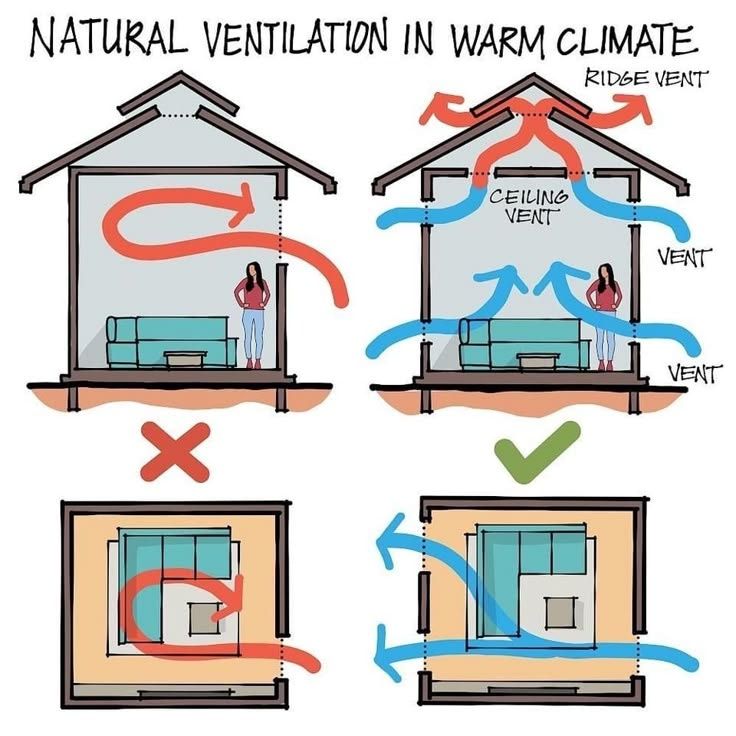
This includes open windows, doors, vents, and any natural airflow created through the building’s architectural design. While natural ventilation is the simplest and most cost-effective approach to refreshing indoor air, it is also the most unreliable. Its performance depends heavily on external conditions such as wind, temperature, and seasonal weather patterns. In winter, homeowners typically avoid leaving windows open due to heat loss, and modern, tightly sealed homes often have very limited natural air movement. As a result, relying solely on natural ventilation can lead to inconsistent airflow, reduced indoor air quality, and increased moisture or condensation issues.
Mechanical Ventilation
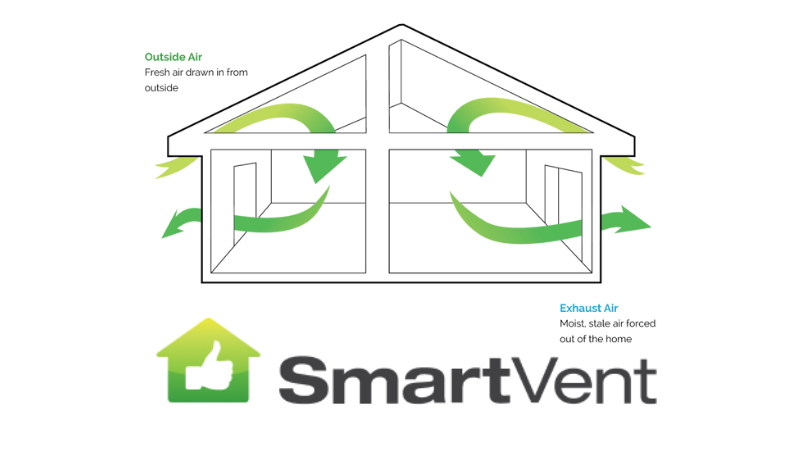
Powered fans and ducting systems actively draw fresh air into the home while simultaneously extracting stale, moisture-laden, or contaminant-filled air. By creating a consistent and controlled airflow, these systems help maintain healthier indoor air quality and reduce issues such as condensation, mould, and lingering odours.
In more advanced configurations, heat recovery technology is incorporated into the ventilation unit. This allows the system to capture warmth from the outgoing air and transfer it to the cooler incoming air, significantly improving energy efficiency. As a result, the home stays warm without relying solely on additional heating, reducing power usage and maintaining a more comfortable indoor environment throughout the year.
Spot Ventilation
Spot ventilation refers to localised extraction systems designed to remove moisture, odours, and airborne pollutants right at their source before they spread throughout the home.
Common examples include kitchen rangehoods, which capture steam, grease, and cooking fumes directly above the stove, and bathroom extractor fans that draw out humid air produced during showers or baths. When used correctly and consistently, spot ventilation significantly reduces condensation, mould growth, and poor indoor air quality. These systems are especially effective when paired with whole-home ventilation, as they provide targeted control in high-moisture or high-pollutant areas where problems typically begin.
Whole-Home Systems
Fully integrated ventilation systems are designed to circulate fresh, filtered air throughout your entire home, ensuring consistent airflow and a healthier indoor environment. These systems operate continuously to remove stale air, reduce moisture buildup, and help prevent issues such as mould, condensation, and airborne pollutants. By delivering clean air to every room, they support year-round comfort, maintain balanced temperatures, and improve overall indoor air quality. Many modern whole-home systems can also include smart controls, humidity sensors, and energy-efficient features that optimise performance while keeping running costs low.

Needing a smart ventilation system?
Contact DMAK Electrical today for a a free consultation.
VENTILATION
What people say about us

Very Professional Team. Had a Solar System solution specked ordered and installed by DMAK electricals for our off grid cabin. Very pleased with their service. Will be happy to use them again.
DMAK recently serviced my heat pumps. They arrived promptly and did a great job. They identified a fault, fixed it promptly and both are now running better than ever. I wouldn’t hesitate to call them again.
Vaughan Heeney